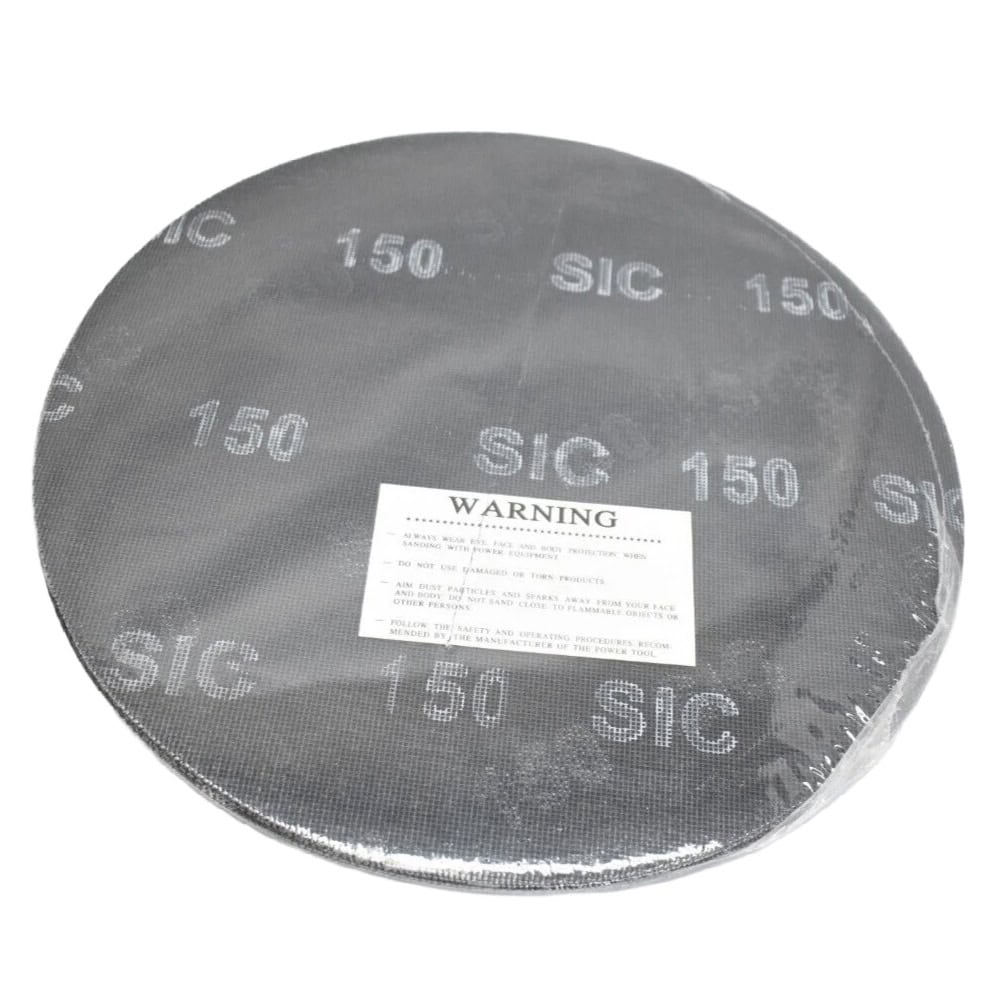
Mesh Sanding Screens for Floor Buffers – Case of 10

SKU: VA414-XXXXX

Price range: $63.87 through $194.51

Open mesh sanding screens embedded with silicon carbide grain on both faces, built for rotary floor buffers and orbital sanders. The open weave lets dust pass through instead of packing the abrasive, so the screen keeps cutting instead of loading up and glazing over, a common failure point with paper discs on between-coat work.

Available in every size from 15″ to 20″ (1″ increments) and grits from 60 to 320, covering everything from scuffing a rough recoat to fine screening before a final finish coat.

Typical Processing time: 2 Business Days

Categories: Sanding Abrasives
Share It:
Description

Silicon Carbide Mesh Sanding Screens Built for Clean, Consistent Floor Buffing

Virginia Abrasives large diameter mesh sanding screens are the standard tool for screening hardwood and sport floors between coats of finish. The screen mounts to a mesh screen driving pad on a rotary floor buffer, where the open weave scuffs the previous coat evenly across a wide diameter — reducing the number of passes needed on gym floors, basketball courts, and other large surfaces compared to smaller discs.

Contractors and school facility crews use these screens instead of paper discs because the open-mesh backing resists clogging. Paper-backed discs have a solid backing with abrasive bonded to one face; as dust builds up between passes it packs into the grain and the disc stops cutting. A mesh screen’s open weave lets dust pass through the material instead of trapping it, so the screen holds its cut rate over a longer stretch of floor before it needs to be swapped or flipped.

Screens are silicon carbide on both sides, effectively doubling usable life versus a one-sided paper disc of the same size. That matters on large jobs — a school gym recoat or a full court refinish — where crews are burning through abrasive by the box.

What this is not for: mesh screens are an intermediate/finish-work abrasive, not a leveling tool. Initial flattening of a floor is a drum-sander-and-paper job; over-screening a floor (using screens where a leveling sand is needed) can dish out the softer spring-wood grain and close the wood’s pores, which then interferes with finish adhesion.

Key Features

  • Silicon carbide grain, double-sided:  Usable on both faces, so one screen covers roughly twice the floor area of a single-sided paper disc before it’s spent.
  • Open-mesh construction resists clogging: The woven backing lets sanding dust pass through instead of packing into the grain, so the screen keeps cutting instead of glazing over mid-job.
  • Full grit range, 60–320 : Coarse grits (60–100) handle scuffing and light leveling touch-up; fine grits (150–320) are built for final screening ahead of a finish coat.
  • Large diameter coverage, 15″–20″ in 1″ increments: Matched to standard mesh screen driving pads on rotary floor buffers, covering more floor per pass on gym floors and courts.
  • Sold in boxes of 10: Sized for job-lot ordering rather than single-sheet retail purchase.

Technical Specifications

  • Abrasive mineral: Silicon carbide
  • Backing: Open-weave mesh, embedded grain on both faces
  • Diameter options: 15″, 16″, 17″, 18″, 19″, 20″
  • Grit options: 60, 80, 100, 120, 150, 180, 220, 320

Packaging / What’s Included

  • Sold in a box of 10 mesh screens, single size and grit per box.
  • No driving pad, hardware, or adhesive included — screens mount to a separately sold mesh screen driving pad.
Specifications

Specifications

WeightN/A
DimensionsN/A
Pad Size

15", 16", 17", 18", 19", 20"

Grit

100, 120, 150, 180, 220, 320, 60, 80

FAQ's

They’re used to scree, lightly abrade, a wood floor between coats of finish, or to scuff a surface before recoating. Mounted on a driving pad on a rotary floor buffer, the screen creates uniform scratch pattern across the floor so the next coat of finish bonds evenly.

A mesh screen has an open woven backing with silicon carbide grain on both sides; a paper disc has a solid backing with grain on one side only. The open weave lets dust pass through the screen instead of packing into the grit, so mesh resists clogging and holds its cut longer than paper on the same job. Mesh screens are also usable on both faces, roughly doubling their life versus a single-sided paper disc.

Finer grits (150–220) are typical for screening ahead of a finish coat, giving a smooth surface without removing too much material. Coarser grits (60–100) are used for scuffing a rougher surface or a recoat that needs more aggressive abrasion. 320 is available for a final, very light pass before a top coat.

Yes. The silicon carbide grain is embedded on both faces of the mesh, so you can flip the screen and use the second side once the first is spent.

Match the screen’s diameter to the driving pad on your floor buffer — the screen should be sized to fully cover the pad. These are available in every diameter from 15″ to 20″ in 1″ increments.

The open weave is designed to let dust pass through rather than load onto the screen’s surface, which is why they resist clogging. Actual airborne dust in the room still depends on whether your buffer or the room has dust collection/ventilation in place.

No. Mesh screens are an intermediate/finish-work abrasive, not a leveling tool. Initial flattening should be done with a drum sander and paper abrasive. Using a screen for leveling work can dish out softer grain and close the wood’s pores, which then affects finish adhesion.

10 per box, one size and grit per box.

Documents

No documents found for this product.

Reviews

Other Items You Might Like

Image is Coming Soon

GameTime Xcel High Solids 2K Waterborne Sports Floor Finish

Brand: GameTime

Price range: $192.00 through $688.28

Select options This product has multiple variants. The options may be chosen on the product page