Ice melt tracked in on shoes leaves a residue on gym floors. Rock salt leaves a white film, and calcium or magnesium chloride leave an oily film. Both dull the finish and act as grit that scratches it, and the oily film also makes the court slippery. The best defense is to stop it at the door with a full scraper-to-wiper mat system, dust mop often, and remove any residue quickly with a product made for ice melt film. If the floor is still dull after the residue is gone, the finish is probably worn, so ask your floor contractor whether a screen and recoat is due.
How does ice melt damage a gym floor?
Ice melt hurts a gym floor in four ways:
- Film and dulling. Sodium chloride (rock salt) leaves a white residue that can dull the finish on wood floors. Calcium chloride and magnesium chloride leave an oily residue that can damage wax and urethane finishes. Cleaning-chemical makers also list dulling, discoloration, and staining from ice melt salts left on a floor too long.
- Slipperiness. The oily film from calcium and magnesium chloride makes hard floors slippery.
- Abrasion. Dirt and grit act like abrasives that scratch and dull the finish. Dried ice melt residue leaves a gritty, abrasive layer.
- Moisture. Snow and slush on shoes carry water onto the court. MFMA warns that in extreme cases, snow or water brought in through open doors or on shoes can damage the finish and upset the moisture balance of the maple. Too much moisture can make wood expand, cup, or buckle.
What does ice melt residue look like on a gym floor?
Look for these signs, starting near entrances and along the main traffic paths:
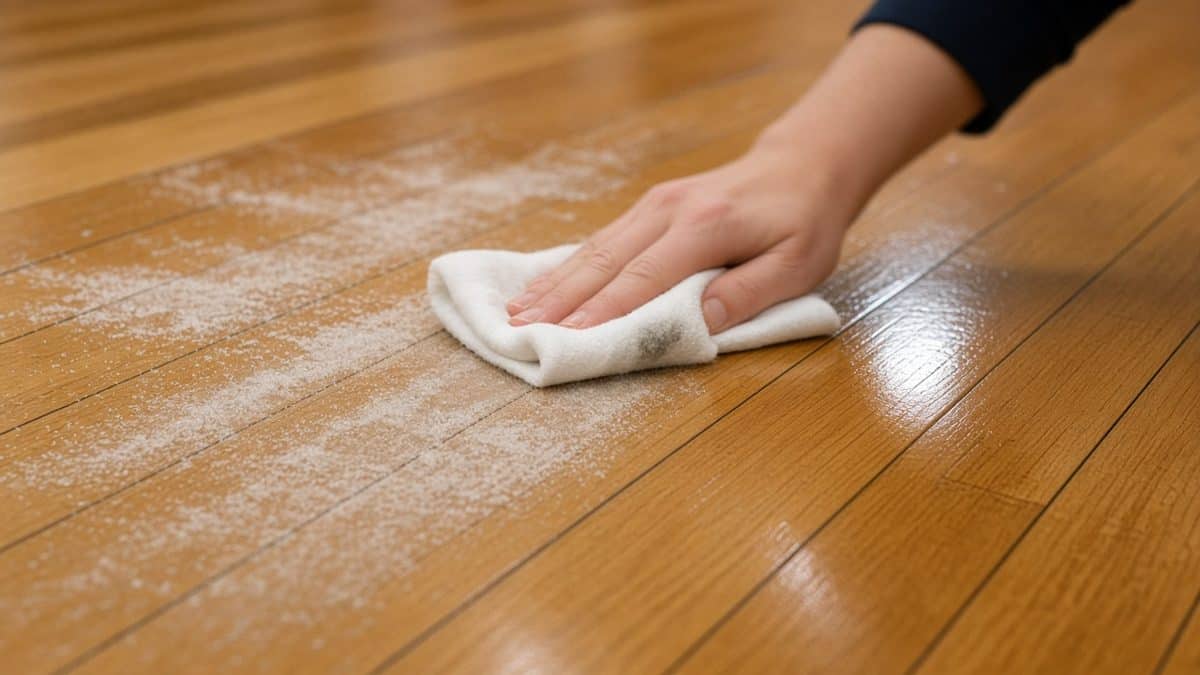
- A white or gray haze tracing the walking path from the door
- An oily or tacky feel, or a floor that looks fine wet but hazy once dry
- Lower gloss and traction in traffic lanes
Quick check: Rub a clean, damp white cloth firmly on a dull spot. If white or gray residue comes off, ice melt film is still there, and cleaning can usually fix it. If the cloth stays clean and the spot is still dull, the finish is likely worn. Have your floor contractor take a look.
How do you prevent salt and ice melt damage? (Winter checklist)
At the entrances
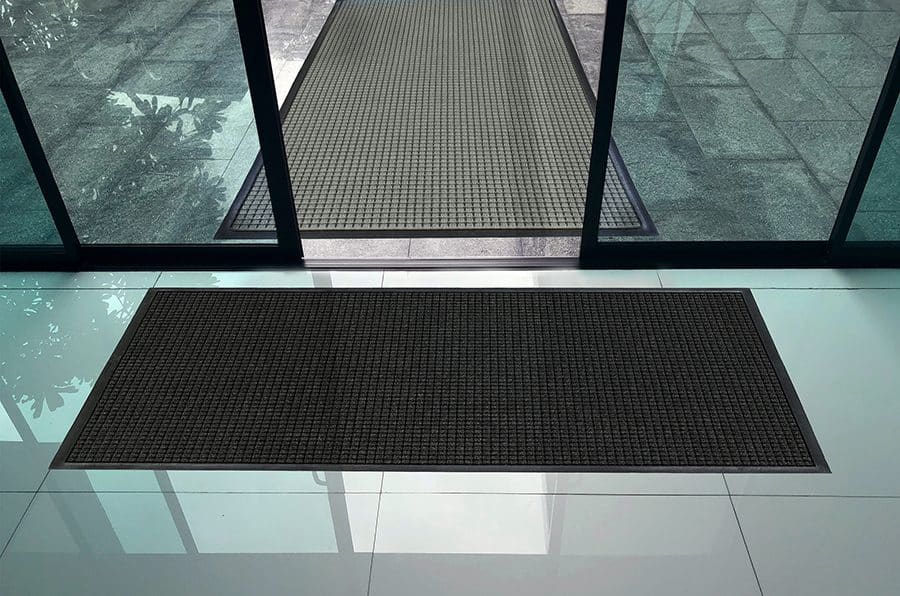
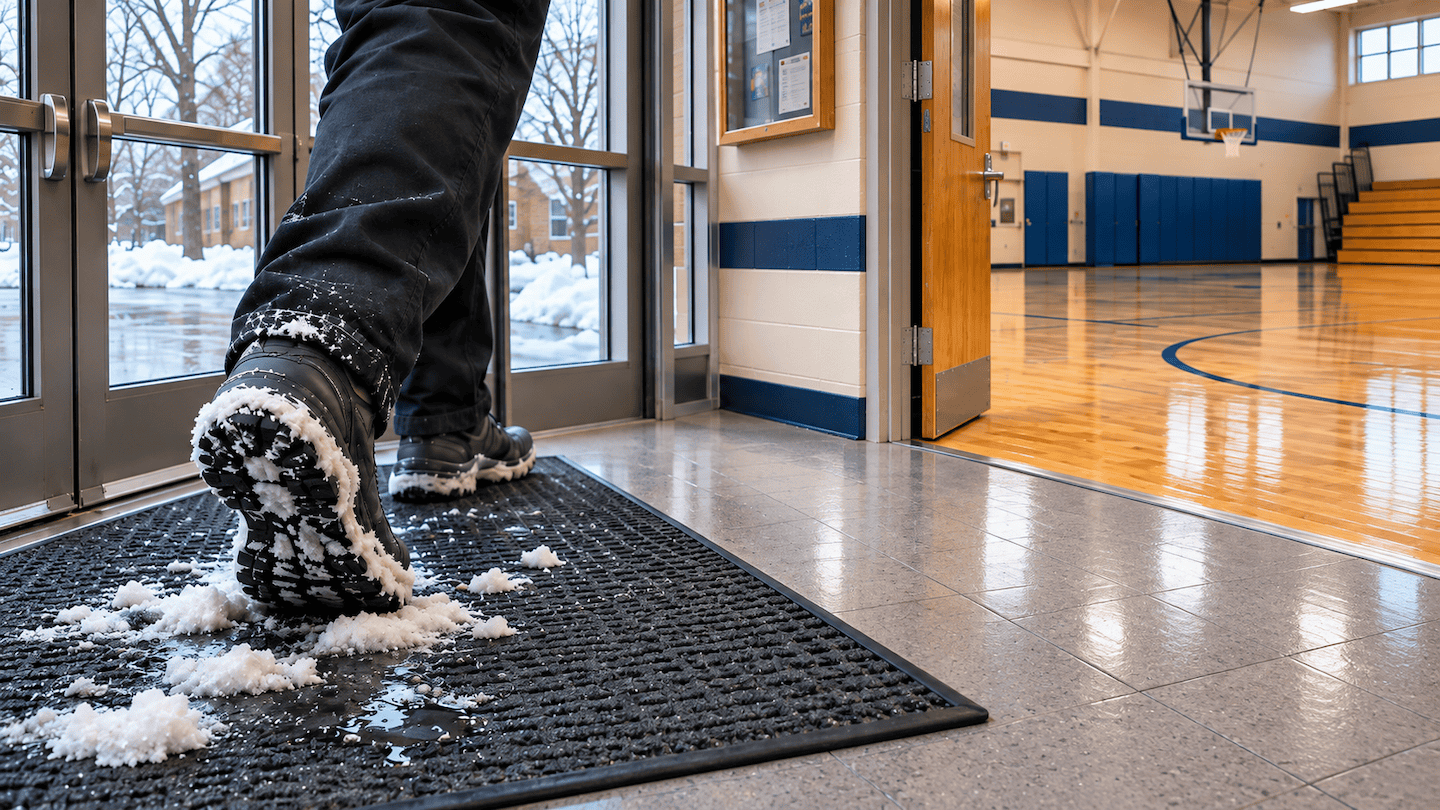
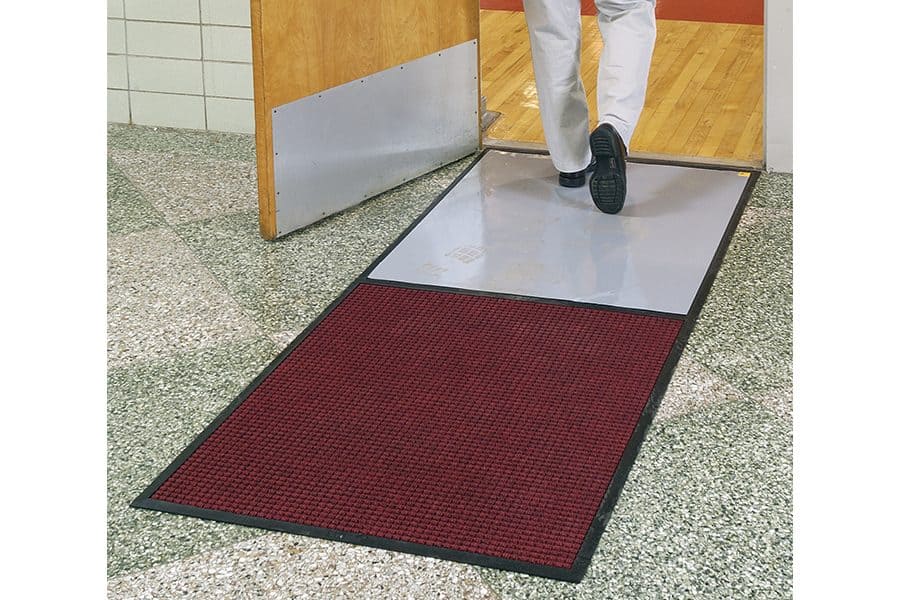
- Build a full mat system at every door that leads to the gym. The industry “Rule of 15s” calls for 5 feet of scraper mat, 5 feet of wiper/scraper mat, and 5 feet of wiper mat: 15 feet of matting per entry.
- Make sure mats touch the door and each other so they work as one system.
- Use a scraper/wiper mat that holds water below foot level, such as the WaterHog Classic Scraper/Wiper Entrance Mat. M+A Matting rates it to hold up to 1.5 gallons of water per square yard, and it comes in sizes up to 6′ x 20′. See all entrance mats.
- Save adhesive dust-control mats like the WaterHog CleanShield Stride for dry, interior doorways. M+A specifies it for dry indoor entrances only, so don’t put it where slush lands.
- Require clean athletic shoes on the court and post signs at the door. Street shoes stay off the playing surface.
- Talk to grounds staff: apply only as much ice melt as the manufacturer directs. Less on the sidewalk means less tracked inside.
Every day
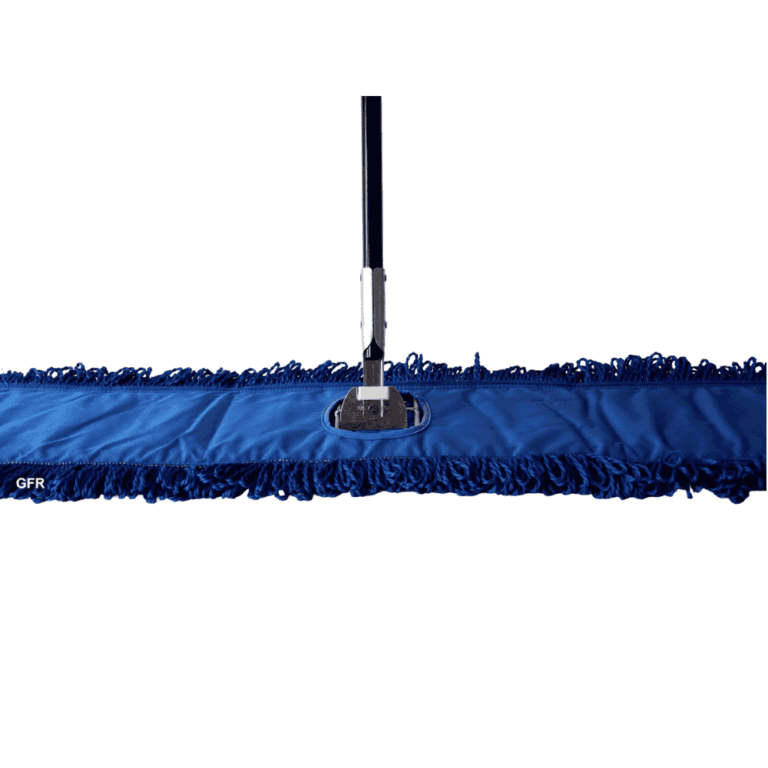
- Dust mop daily with a properly treated dust mop. MFMA says floors with heavy use may need it up to three times a day. In winter, add passes near entrances. A Wire Frame Microfiber Dust Mop System or the 72″/96″ Big Job Duster covers a court quickly. If you use a treated cotton head, Dust Trax is a water-based treatment that leaves no oily residue.
- Wipe up water and slush right away.
- Pull up entrance mats, clean them, and clean and inspect the floor underneath daily. Mats left down too long can trap moisture or discolor the floor.
- Clean mats so they don’t become the source. Vacuum them, and extract them when soiled. Store mats flat, not rolled.
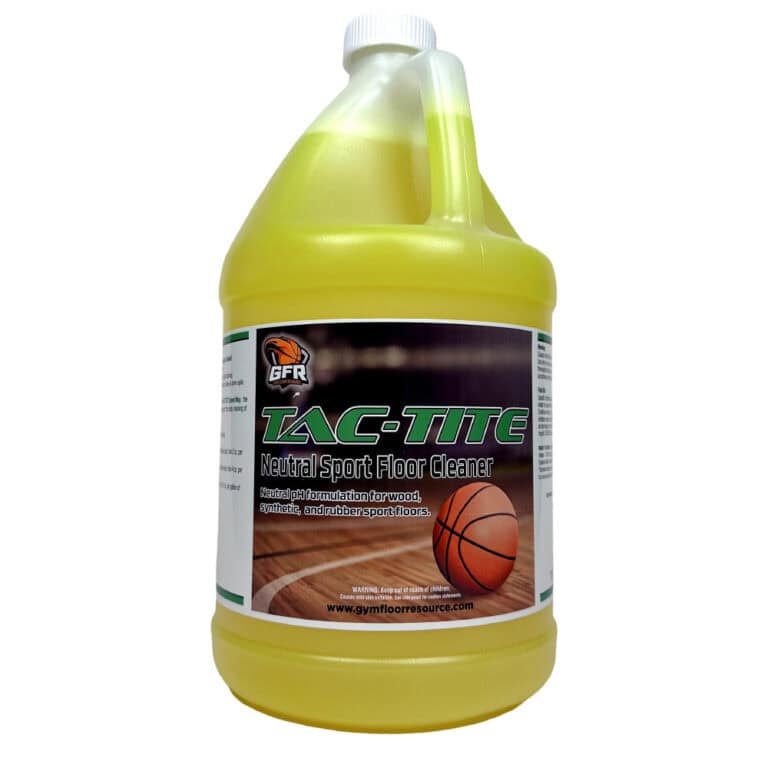
- Damp-clean only with a cleaner your finish manufacturer approves, such as our Tac-Tite pH Neutral Gym Floor Cleaner, using a system that puts down very little water, like the MopSmart 8′ Gym Floor Mop System or the 6′ Court Clean Mop System. Browse gym floor cleaners.
Building and climate
- Keep HVAC running all winter. MFMA recommends 55–75°F and relative humidity held within a 15% band, for example 35–50%. Dry heated air can open shrinkage cracks, and water that gets into those cracks can cause cupping. Temp and RH data loggers let you verify the numbers instead of guessing. Read more in RH & Temperature Monitoring for Gym Floors.
- Check doors, roof drains, and pipes before the first storm. Leaks, burst pipes, and condensation from uninsulated ductwork are common winter sources of water damage.
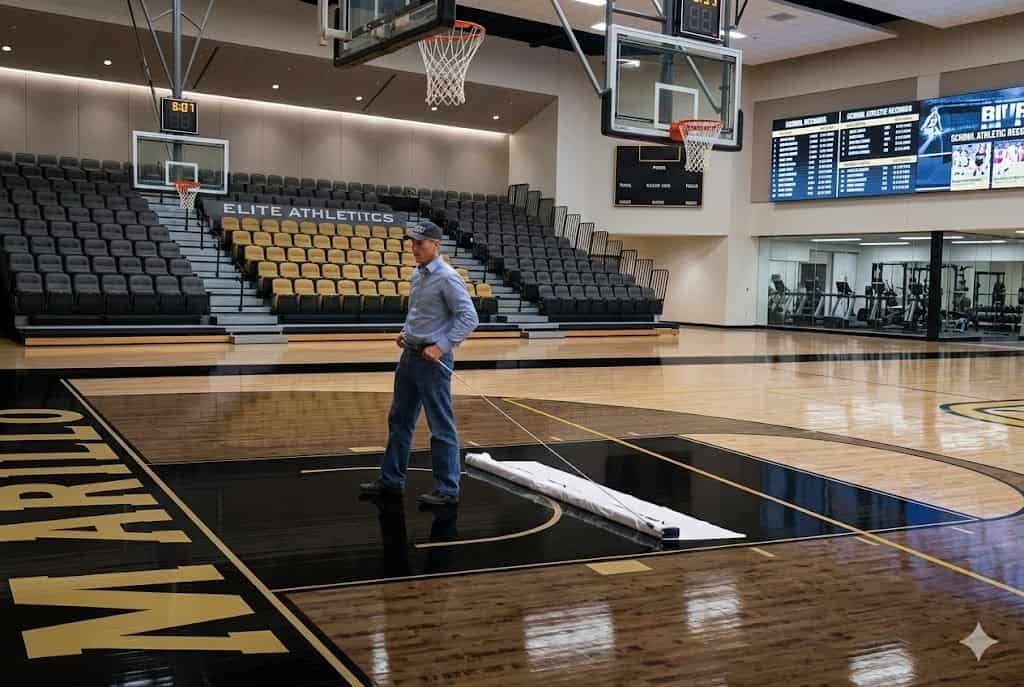
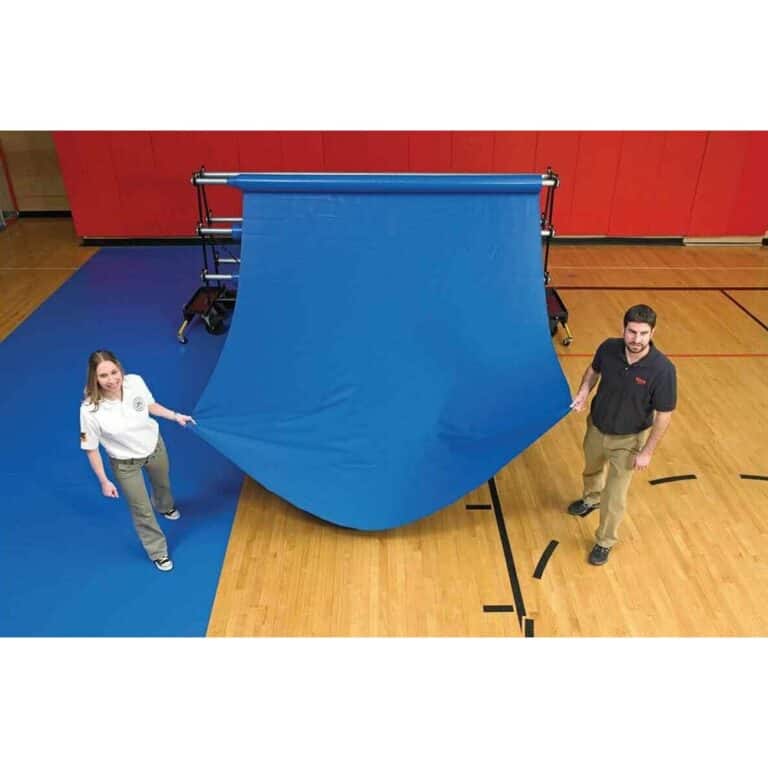
- Cover the floor for events. When assemblies or non-athletic events bring street shoes onto the court, roll out GymGuard Pre-Cut Gym Floor Covers. Don’t leave covers down longer than needed, because maple has to breathe to stay in balance with the room. Never cover a freshly coated floor before the finish has fully cured.
What NOT to use
- No vinegar. It’s an acid, and finish makers Bona and Pallmann both warn it dulls and breaks down wood floor finish.
- No ammonia cleaners or oil soaps. They dull the finish and can affect your ability to recoat later.
- No household cleaners or products made for other floor types. They can damage the finish and leave the floor sticky or slippery.
- No wet mops, flooding, or water-based power scrubbers on maple. MFMA calls water “your floor’s worst enemy” and says never to clean with scrubbing machinery or power scrubbers that use water. Action Floors warns that water an auto scrubber leaves behind can get into cracks and cause cupping in the middle of winter.
- No steam cleaners.
How do you remove salt residue from a gym floor?
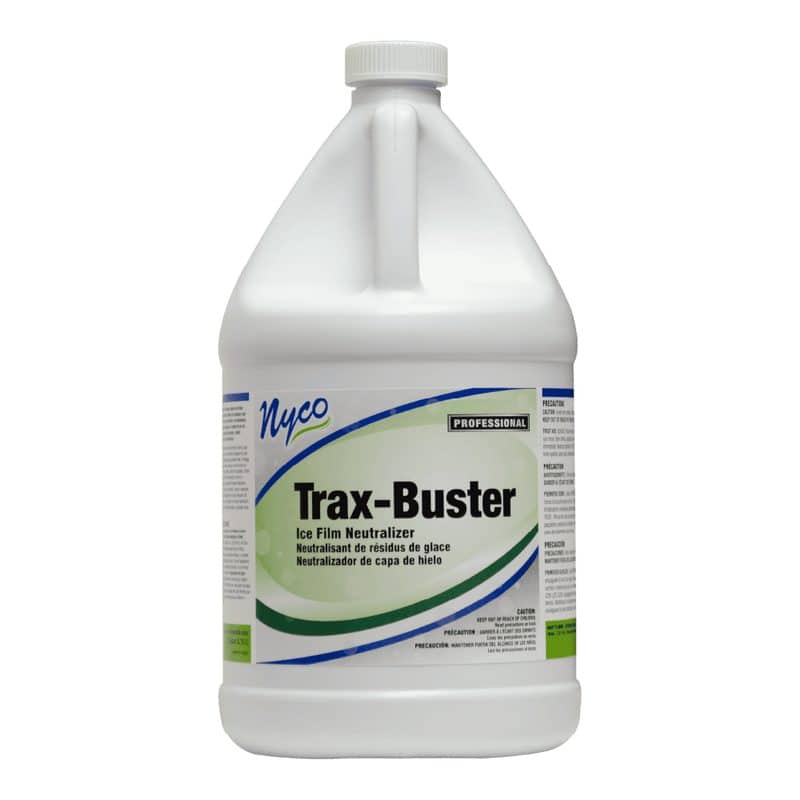
Ordinary neutral cleaners don’t remove ice melt film well. ISSA notes they’re “ineffective at thoroughly removing the ice melt haze,” which is why a floor can look hazier right after mopping. Products made for ice melt residue work better. According to the manufacturer, most ice melt residue is alkaline, and Trax-Buster is acidic (pH 3.0–5.0), so it neutralizes the residue for pickup. The manufacturer states Trax-Buster can be used “to neutralize salt residue on wood, concrete, and metal” and lists “Wood Floors” among the places to use it. Because ISSA also warns that a pH that’s too high or too low can harm finish, use any acidic remover as a spot or periodic treatment, not a daily cleaner.
Step by step:
- Test first. As a best practice, try the remover on a small, low-visibility area before treating a whole zone. Use it on the entry zones and traffic lanes where film shows, not as an all-court daily cleaner.
- Remove loose grit. Dust mop the whole area thoroughly. You don’t want to grind crystals into the finish.
- Pull up entrance mats. Ice melt seeps through and around them, so clean underneath too.
- Mix to label, apply by hand. For Trax-Buster, the manufacturer’s directions call for 1–2 oz per gallon of warm water. On maple, follow MFMA’s guidance against water-using power scrubbers and skip the label’s auto-scrubber and pressure-washer options.
- Apply with as little water as possible. Use a well-wrung microfiber pad or a low-moisture damp-mop system. Never puddle solution on maple. Use clean pads and change your solution often.
- Pick it up and let it dry. Wipe residue away, then check the area again. If white streaks remain, repeat.
- Clean the mats too. According to the manufacturer, Trax-Buster can be used at 2 oz per gallon for extraction cleaning of entrance matting. Test for colorfastness first.
When is it too late? Recoat or screen and recoat
If the damp-cloth test comes up clean after a proper residue cleaning but traffic lanes are still dull, the finish has probably worn down.
- Screen and recoat. MFMA recommends that most gym floors be screened and recoated annually. The floor is dust mopped, abraded with a fine screen (no steel wool under water-based urethane), tack-cleaned, and given a fresh coat per the finish manufacturer. For oil-based finishes, see our Pro Contractor’s Guide to Recoating with Oil-Based Finish. It covers oil-based finishes only.
- Mind the cold. Cold temperatures can affect how finish dries. Follow the label cure times before allowing play or laying covers.
- Call a pro. If boards are cupping, the finish is worn through to bare wood, or water came in from a leak, call your MFMA sport floor contractor before you try repairs.
Frequently Asked Questions
Can ice melt ruin a hardwood gym floor?
Yes, if it stays on the floor. Rock salt leaves a white residue that dulls wood finish. Calcium and magnesium chloride leave an oily film that can damage urethane finish and make the court slippery. Slush on shoes also brings in water. A full entrance mat system and quick cleanup prevent most damage.
What removes the white film from a gym floor?
A product made to remove ice melt residue, used at the label dilution with a well-wrung microfiber pad or low-moisture damp mop. According to the manufacturer, Trax-Buster can be used on wood floors. Test a small area first, and use it on problem spots, not daily. Never use vinegar, which is acidic and degrades wood floor finish.
How long should entrance mats be to stop salt?
A common industry guideline is the Rule of 15s: 5 feet of scraper mat, 5 feet of wiper/scraper mat, and 5 feet of wiper mat at each entry, for 15 feet in total. The mats should touch the door and each other so they work as one system and catch salt before it reaches the court.
How often should we dust mop the gym in winter?
Dust mop at least once a day with a properly treated dust mop. The Maple Flooring Manufacturers Association says floors with heavy use may need dust mopping up to three times a day. In winter, sports flooring company Kiefer USA recommends dust mopping three times daily, along with spot cleaning.
Can we use an auto scrubber to get salt off our gym floor?
No. The Maple Flooring Manufacturers Association does not recommend power scrubbers on maple sports floors. Excess water and the machine’s weight can harm the boards, finish, and supporting floor system, and may affect warranties. Use a treated dust mop, then a low-moisture damp mop with a cleaner your finish manufacturer approves.
Why is our gym floor dull even after we cleaned off the salt?
Rub a clean, damp white cloth on a dull spot. If white or gray residue comes off, ice melt film is still there, so clean that area again. If the cloth stays clean and the spot is still dull, the finish is likely worn. Ask your sport floor contractor whether a screen and recoat is due.